
Introduction
The way people look for information on the internet is changing. In times people mostly typed words into search tools and then picked website links. Now they also ask questions using intelligence tools and want fast helpful answers.
This change has made two marketing methods more important than ever: Search Engine Optimization (SEO) and Answer Engine Optimization (AEO).
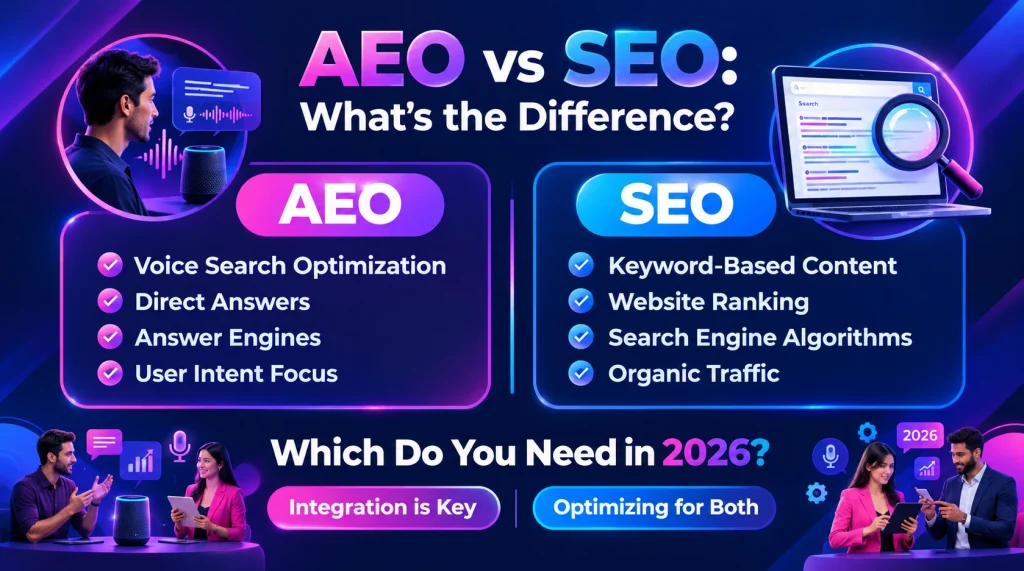
What is the difference between SEO and AEO in 2026? Are these methods working against each other. Should companies use both?
In this guide we will explain SEO vs AEO look at their differences and give real-life tips to help your company get more visibility on regular search results and on answers, from artificial intelligence tools.
What Is SEO (Search Engine Optimization)?
Search Engine Optimization or SEO is the process by which a website is improved so that search engines can understand its content and show the pages to people looking for related information.
The main goal of SEO is to boost visibility in search results and bring relevant visitors to the site without paying for each click.
Key elements of SEO include:-
– Keyword research: Knowing what the target audience searches for.
– On-page SEO: Improving titles, headings, content and internal links.
– SEO: Enhancing crawlability, indexing, mobile usability and website performance.
– Content marketing: Publishing useful original and relevant content.
– Off-page SEO: Earning trustworthy backlinks and building brand credibility.
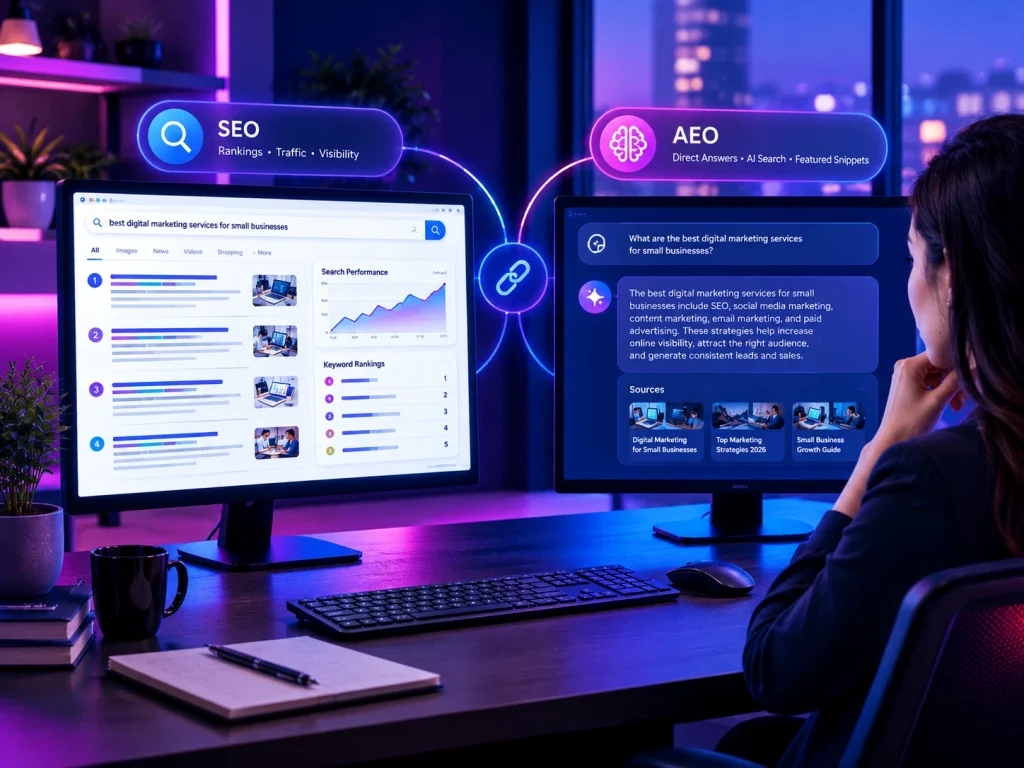
For example a digital marketing agency that targets businesses might write a blog titled “digital marketing strategies, for small businesses” to draw people who are searching for marketing advice.

What Is AEO (Answer Engine Optimization)?
Answer Engine Optimization (AEO) is about making your content easy for search engines and AI answer systems to understand, extract and possibly show when users ask questions.
The goal of AEO is to give answers to specific questions and share reliable helpful information.
Depending on the platform content that is optimized this way might show up in featured snippets voice search results, AI Overviews or other answers generated by AI.
Important parts of AEO include:
– Answering customer questions directly.
– Using clear headings and a logical flow in your content.
– Offering short explanations backed by useful details.
– Including relevant FAQs to match what people are searching for.
– Showing expertise with accurate facts and trusted sources.
For example a site could answer “How much does SEO cost, for a business?” by explaining the things that affect pricing.
AEO can help that answer be easier to find and understand.. It doesn’t mean an AI system will always pick or show it.

SEO vs AEO: What Is the Difference?
SEO and AEO share many principles, but their primary objectives differ.
|
Feature
|
SEO
|
AEO
|
|---|---|---|
The important point is that AEO does not replace SEO. Google’s guidance confirms that established SEO practices remain relevant to AI-powered search experiences.
Why Are SEO and AEO Important in 2026?
Search behavior is becoming more conversational. People ask detailed questions, compare products, and seek recommendations through traditional search engines and AI-powered tools.
Businesses need content that helps users at different stages of their decision-making journey.
Here is why both strategies matter:
1. Reach customers through search experiences
I think SEO helps your pages compete in organic search results while answer‑focused content can improve their suitability for systems that give direct answers.
2. Build trust and credibility
I believe accurate information original insights, transparent business details and useful explanations can help show your expertise.
3. Address customer questions
I know answering questions, about pricing, services, benefits and processes helps potential customers understand what your business offers.
4. Support the customer journey
A person may discover your brand through a search result, learn from a detailed blog, and later contact your business for a service.
Neither SEO nor AEO guarantees traffic or leads, but both can support a well-planned digital marketing strategy.
5 Strategies to Improve SEO and AEO Together
1. Understand Search Intent
Before writing any content identify what your audience wants to know. Are they looking for facts, comparing services or ready to buy? Use keyword research, customer questions and related search queries to create content that satisfies those needs.
2. Answer Questions
Place a clear answer at the start of each section. Then give examples, explanations and extra details. For example define SEO before talking about its benefits. This format helps readers grasp the content quickly without hunting through paragraphs.
3. Create Helpful Original Content
Do not just copy articles. Add examples, your own observations, expert tips and details that fit your industry. Google advises focusing on trustworthy, people‑first content instead of making material only to please AI.
4. Strengthen Technical SEO
Make sure your key pages can be crawled and indexed. Use page titles, logical headings, useful internal links mobile‑friendly design and fast loading. Structured data can help search features when set up right but special schema is not needed for Google AI features.
5. Measure Performance and Update Content
Use Google Search Console to track impressions, clicks and search queries. Use analytics tools to look at engagement and conversions. Where good reports exist, also keep an eye, on AI referrals, citations and brand mentions. Refresh old. Improve pages according to real user needs.

SEO vs AEO vs GEO: How Are They Different?
Another term worth understanding is Generative Engine Optimization (GEO).
SEO :- Focuses on improving visibility in search engines.
AEO:- Focuses on making content suitable for answers.
GEO:- Focuses on improving the chances of being referenced or cited in AI responses.
These terms. Their definitions are not universally standardized.
Google considers optimization for its search experiences part of SEO.
So, for businesses the practical takeaway is simple: build an accessible website publish original and trustworthy content answer real questions and establish a consistent credible online presence.

Find Out Answers Here
SEO focuses on improving a website's visibility in organic search results. AEO focuses on making content clear and useful for systems that provide direct answers to users' questions.
No. SEO remains essential for website discovery and search visibility. AEO complements SEO by emphasizing clear answers and content that may be useful in answer-based search experiences.
Answer relevant questions directly, use descriptive headings, publish accurate information, improve technical SEO, and organize content logically. There is no guaranteed formula for being selected as an answer.
Yes, combining both approaches is a practical option for many small businesses. SEO supports discoverability, while answer-focused content helps address customer questions and decision-making needs.
There is no fixed timeline. Results depend on competition, website condition, content quality, industry, and other factors. Monitor performance regularly and make improvements based on evidence.
CONCLUSION
Understanding SEO and AEO in 2026 helps businesses adapt to changing search behavior without abandoning proven fundamentals. SEO supports visibility while AEO encourages clear useful answers that may be surfaced in answer-based experiences.
The strongest approach is to combine SEO original content, relevant customer questions and trustworthy information. Focus, on helping people then measure how effectively your content attracts and converts the right audience.
Strengthen Your SEO and AEO Strategy with Marketlift
Want to improve your website’s search visibility and create content that answers your customers’ questions? Marketlift can help you develop a digital marketing strategy tailored to your business goals.