Author name: sidrajafri

Local SEO strategies

Local SEO Strategies to Help Small Businesses Attract Nearby Customers | Marketlift

Your shop is five minutes from a customer who searches “dentist near me,” but a competitor on the next lane appears first. For small business owners, that is a familiar frustration. Nearby customers are often ready to call, visit, or book quickly, so being visible at that moment matters. The practical way to improve this is by using local SEO strategies: a set of steps that help Google understand where your business is, what you offer, and why people trust you. In this guide, you will learn seven simple, genuine ways to improve local search visibility, avoid common mistakes, and measure whether your efforts are bringing in real enquiries. What Is Local SEO? Local SEO (local search engine optimization) is the process of improving a business’s visibility in location-based searches, such as “salon in Prayagraj.” Unlike broader SEO, which targets searchers anywhere, it focuses on customers near you. Google may show relevant businesses in Google Search and Google Maps, with details like address, hours, reviews, and phone number. Why Local SEO Matters for Small Businesses Visibility in local searches:- Your business can appear when people look for services in your area. Customers with clear intent:- Local searchers are often close to calling or visiting. More ways to connect:- Calls, directions, website visits, and enquiries can all start from one listing. Trust:- Accurate details and genuine reviews help people choose confidently. No tactic guarantees results, but these basics make it easier for the right customers to find you. 7 Practical Local SEO Strategies 1. Optimize Your Google Business Profile Your Google Business Profile (GBP) is a free listing that controls how your business appears in Search and Maps. Google says local results are based mainly on relevance, distance, and prominence, so complete information helps. Add your exact name, a precise primary category, services, opening hours, phone number, and real photos. Reply to reviews. Follow Google’s eligibility and representation rules, and remember that a complete profile does not guarantee a top position. 2. Use Local Keywords Strategically Location-based keywords combine a service with a place, such as “salon in Prayagraj” or “dentist in Lucknow.” Use them naturally in page titles, headings, service descriptions, and helpful content. For example, a coaching institute could create a page explaining its NEET batches for students in Kanpur. Write for customers first. Repeating the same phrase unnaturally is keyword stuffing, and it makes content harder to read. 3. Create Useful Location-Specific Website Content Create a dedicated page for each service you genuinely offer and each area you genuinely serve. Include unique details: landmarks, service timings, local examples, parking information, and customer questions from that area. A café in Lucknow might publish a page about its Hazratganj outlet and event bookings. Avoid publishing dozens of near-identical city pages with only the place name changed, as they offer little value. 4. Maintain Consistent Business Information NAP consistency means your business name, address, and phone number match everywhere online. Check your website, GBP, social profiles, and trusted directories such as relevant industry or local listing platforms. If you move or change your number, update every listing. Consistent details prevent confusion, help customers reach you, and make it easier for search engines to understand your business. 5. Encourage Genuine Customer Reviews Ask satisfied customers for honest feedback after a service, using a simple review link shared by WhatsApp or SMS. Reply politely to every review, including criticism. Google counts review count and score as part of prominence, but never rely on that alone. Do not buy reviews, write fake ones, or offer discounts or gifts in exchange, as Google’s policies prohibit this and may restrict your profile. 6. Improve the Mobile Experience Many local searches happen on phones, so your website must work well there. Use a responsive design, compress images, keep text readable, and add a click-to-call button and a WhatsApp enquiry link. Make menus simple and place your address and timings where visitors can see them easily. A smooth mobile page helps customers take action instead of leaving. 7. Build Local Authority and Measure Results Earn relevant local mentions through genuine activity: sponsoring a school event, partnering with nearby businesses, or being featured by a local news site. These can lead to legitimate local backlinks. Then measure progress. Google Search Console shows search visibility and clicks, Google Analytics shows website behaviour, and GBP performance data shows calls and direction requests. Track enquiries and conversions, not just traffic. Common Local SEO Mistakes to Avoid Keyword stuffing:- Write naturally and use one clear phrase per page. Outdated information:- Review listings regularly, especially after holidays or relocation. Fake reviews:- Collect only honest feedback. Duplicate location pages:- Create pages only for real service areas, each with unique value. Poor mobile usability:- Test pages on your own phone. Unhelpful content:- Answer real customer questions. Frequently Asked Questions 1. What is local SEO, and how does it work? Local SEO helps your business appear in location-based searches. Google considers relevance, distance, and prominence, using information from your Business Profile, website, reviews, and other online sources, to show nearby results that best match what the searcher wants. 2. How long does local SEO take to show results? There is no fixed timeframe. Results depend on competition, your location, profile quality, and consistency. Small improvements may be noticed sooner than stronger rankings, so review progress over several months rather than expecting quick changes. 3. Is local SEO free for small businesses? You can start for free by creating a Google Business Profile, updating your details, and collecting honest reviews. Costs may arise for website improvements, content creation, tools, or professional help, depending on how much support your business needs. 4. Can a service-area business use local SEO without displaying its address? Yes. If you do not serve customers at your address, Google asks you to hide it and list your service areas instead. You can still optimize your profile, website, reviews, and local content to attract relevant customers. 5. How can small businesses measure local SEO […]


AI Marketing Automation

AI Marketing Automation: How to Save Time and Grow Your Business | Marketlift

A practical guide for Indian business owners: what to automate, which tools to consider, and how to start small. Trigger  a customer fills in your enquiry formAI drafts a personalised follow-up email is preparedYou approve  a person checks it before it is sent Between replying to enquiries, scheduling posts, sending emails and preparing monthly reports, many business owners spend more time managing marketing than improving it. AI marketing automation helps by handling repetitive work, such as follow-ups, audience grouping and first drafts. You keep control of strategy and approvals. Used carefully, it saves time and makes customer communication more relevant. This guide explains what it is, where it helps, which tools to consider, what can go wrong and how to start with one small workflow. What Is AI Marketing Automation? AI marketing automation uses artificial intelligence alongside marketing software to handle repetitive tasks such as sending emails, scheduling posts, scoring leads and reporting. It can suggest content, group audiences and flag patterns, but people should still review and approve important messages.Traditional automation:- Follows fixed rules you set. If someone submits a form, send email one.AI-assisted automation:- Adds support on top of rules: drafting the email, suggesting the segment, highlighting leads that need attention. Many “AI” features still need your approval, connected tools and clean data. Few are fully hands-off. Hypothetical example:- A coaching institute in Kanpur gets course enquiries through a website form. A rule sends a welcome email. AI drafts a follow-up based on the course chosen. A staff member approves it before the sequence starts. How AI Marketing Automation Helps Businesses Save Time Automating Email Marketing AI can draft subject lines, group subscribers and trigger welcome or re-engagement emails automatically. This removes manual list handling. Example:- A jewellery store sends a care-tips email after every purchase. Limitation:- AI can copy sound generic, so edit it to match your brand voice. Simplifying Social Media Management AI assistants can suggest post ideas, rewrite captions for different platforms and schedule content in advance. Example:- A restaurant turns one festival offer into three platform-specific captions. Limitation:- AI doesn’t know your local context, so check tone, facts and offers before publishing. Generating and Nurturing Leads Automation captures enquiries, sends an instant acknowledgement and reminds your team to follow up. Example:- A real-estate agent gets a reminder when a prospect goes quiet for three days. Benefit:- Faster responses. Limitation:- Poor lead data leads to poor prioritization. Personalizing Customer Experiences Personalization uses signals such as pages viewed or past purchases to show relevant offers. Example:- An online saree store emails a shopper about new arrivals in the category she browsed. Benefit:- More relevant messages. Limitation:- It needs customer permission and enough quality data. Analysing Marketing Performance AI reporting features can summarize campaigns, spot unusual drops and compare channels. Example:- A weekly summary shows which source produced the most enquiries. Benefit:- Less spreadsheet work. Limitation:- AI can misread cause and effect, so verify key numbers yourself. Best AI Marketing Automation Strategies for Business Growth Start small and expand only after a workflow works: Automate the first response:- Acknowledge every enquiry quickly, then route it to a person. Segment your audience:- Separate new leads, existing customers and inactive contacts, and send each group relevant messages. Use AI for first drafts, not final copy:- Let it speed up content marketing work, then edit. Test one change at a time:- Compare two subject lines or two offers before scaling. Review performance weekly:- Look at enquiries, sales and cost per lead, not just opens and clicks. Popular AI Marketing Automation Tools Tools differ in purpose, plan limits and regional availability. Check each official pricing page before buying. HubSpot A CRM with marketing, sales and service tools and its Breeze AI features. The most powerful AI features generally sit in Professional and Enterprise subscriptions, so it suits teams ready to invest. Mailchimp Email marketing with AI help for content. Intuit Assist can generate email content within some pre-built journeys. Zapier Connects apps so a trigger in one tool starts an action in another, with AI agents on top. Suits custom workflows, such as sending form leads to a CRM and a Slack alert. Buffer Social media scheduling with an AI Assistant for drafting and repurposing posts. The free plan covers three channels with a limit on queued posts. Common Mistakes to Avoid Publishing unchecked AI content:- Google’s guidance now advises manually fact-checking and reviewing AI-generated content before publishing. Over-automating:- Customers still want a human reply for complaints and complex questions. Sending irrelevant promotions:- Poor targeting leads to unsubscribes and spam complaints. Ignoring privacy and consent:- India’s data protection rules are being phased in, with full compliance required by May 2027. Collect clear permission and keep records. Trusting AI recommendations blindly:- Cross-check suggestions against your own data. Measuring activity, not outcomes:- Emails sent matter less than enquiries and sales. How to Get Started With AI Marketing Automation Identify repetitive tasks:- List what you repeat every week, such as replies, reports or posting. Set measurable goals:- Example: reply to every enquiry within one hour. Choose a suitable tool:- Pick one that fits your budget, team size and existing software. Build one small workflow:- Begin with a welcome email or lead reminder. Test before launch:- Run it with your own email and phone, and check every message. Monitor and improve:- Review results each month and refine. Frequently Asked Questions 1. What is AI marketing automation used for? It is used to handle repetitive marketing work such as email sequences, social scheduling, lead follow-ups, audience segmentation and reporting. Humans still set goals and approve key content. 2. Is AI marketing automation suitable for small businesses? Yes, if you start with one simple workflow. Many tools offer entry-level or free plans, though features and limits vary. Small teams often benefit most because they have the least spare time. 3. Can AI marketing automation increase sales? It can support sales by improving response speed, follow-ups and message relevance. It does not guarantee results. Outcomes depend on your offer, audience, data quality and how well the workflow is designed. 4. Is AI marketing […]

Digital marketing metrics

Digital Marketing Metrics Every Business Owner Should Know | Marketlift

Introduction Digital marketing helps businesses connect with customers grow brand recognition and boost sales.. Just running campaigns isn’t enough. Business owners also need to know if their efforts are actually working. That’s where digital marketing metrics come in. These numbers help you check how your website is doing get insights, into what customersre doing measure the cost of ads and spot areas that need improvement. No matter if you run a shop, an online store or a fast-growing company tracking the right metrics can lead to better marketing choices. In this guide Marketlift shares the digital marketing metrics every business owner should understand and how to use them well. What Are Digital Marketing Metrics? Digital marketing metrics are numbers that show how well your online marketing activities work. Digital marketing metrics help you understand how many people visit your website interact with your content click your advertisements and become customers. For example website traffic measures visits conversion rate measures completed actions. Return on ad spend measures revenue generated relative, to advertising expenditure. Tracking Digital marketing metrics allows businesses to focus on results of relying on assumptions. 10 Important Digital Marketing Metrics Every Business Owner Should Track 1. Website Traffic Website traffic measures the number of visits your website receives. It helps you understand whether people are discovering your business online. You can analyze traffic from organic search, paid advertisements, social media, email campaigns, and referral websites. Why it matters: Increasing relevant website traffic can create more opportunities to generate leads and sales. How to improve it: Publish useful content, improve your SEO, promote your website on social media, and create relevant advertising campaigns. 2. Conversion Rate Conversion rate measures the percentage of visitors who complete a desired action, such as purchasing a product, submitting a contact form, or subscribing to a newsletter. Formula: Conversion Rate = (Conversions ÷ Total Visitors) × 100 For example, if 1,000 visitors generate 40 enquiries, your conversion rate is 4%. Why it matters: It shows how effectively your website or campaign turns visitors into leads or customers. How to improve it: Use clear calls to action, simplify forms, improve landing pages, and make your website easy to navigate. 3. Click-Through Rate (CTR) Click-through rate measures the percentage of people who click a link or advertisement after seeing it. Formula: CTR = (Total Clicks ÷ Total Impressions) × 100 For example, 100 clicks from 2,000 impressions produce a CTR of 5%. Why it matters: CTR helps evaluate the relevance and appeal of search listings, online advertisements, and email links. How to improve it: Write compelling headlines, use relevant keywords, and make your advertising messages match your audience’s needs. 4. Cost Per Lead (CPL) Cost per lead measures how much money your business spends to generate one lead through marketing activities. Formula: CPL = Total Marketing Campaign Cost ÷ Number of Leads For example, spending ₹10,000 to generate 50 leads results in a CPL of ₹200. Why it matters: This metric helps you compare campaign efficiency and understand whether your lead-generation efforts are cost-effective. How to improve it: Refine audience targeting, test landing pages, and focus on channels that generate relevant enquiries. 5. Customer Acquisition Cost (CAC) Customer acquisition cost measures the average amount spent to acquire one new customer. Formula:- CAC = Total Acquisition Costs ÷ Number of New Customers Depending on your chosen calculation acquisition costs may include advertising, agency fees, sales expenses and relevant marketing tools. Why it matters: A business needs to understand what it costs to gain customers and whether the revenue or profit they generate justifies that expense. How to improve it: Improve conversion rates strengthen customer retention and allocate budgets to effective marketing channels. 6. Return on Ad Spend (ROAS) ROAS measures how revenue your advertising generates for every rupee spent on ads. Formula:- ROAS = Revenue Attributed to Ads ÷ Advertising Spend For example if your campaign generates ₹40,000 in attributed revenue from ₹10,000 in ad spend your ROAS is 4:1. Why it matters: ROAS helps evaluate advertising performance and compare campaigns. Remember that ROAS is not the same, as profit. Product costs, salaries, taxes and other expenses can affect profitability. 7. Engagement Rate Engagement rate is, about how much your audience interacts with your content or website. On platforms engagement can mean likes, comments, shares, saves or time spent on the site. Why it matters: Engagement shows if your content is connecting with the people you want to reach. How to improve it: Give information make videos that matter start real conversations and share content that solves customer problems. Make sure to use the engagement-rate formula from the platform when looking at the numbers. 8. Search Impressions and Organic Clicks Search impressions tell you how times your site shows up in Google Search results. Organic clicks count how times people click on your free search listings. Track these numbers with Google Search Console. Why they matter: Impressions show how visible your site is, while clicks show if people actually visit your site from search results. How to improve them: Write search‑friendly content make page titles and descriptions better and answer the questions your audience looks for. 9. Email Open and Click Rates Email open rate estimates the share of delivered emails that are opened while click rate measures how often people click links in your emails. Definitions differ by platform and privacy settings can change open‑rate accuracy. Why they matter: Click activity tells you if your email content encourages readers to act. How to improve it: Separate your audience into groups write subject lines personalize content properly and include clear calls to action. 10. Customer Lifetime Value (CLV) Customer lifetime value estimates the money or in some models profit a business expects to earn from a customer over the whole relationship. Why it matters: CLV helps businesses see the long‑term value of customer relationships and judge acquisition costs. How to improve it: Provide customer service send relevant follow‑up messages and encourage repeat purchases with valuable experiences, for […]

Email marketing strategies

Email Marketing Strategies to Turn Subscribers Into Customers | Marketlift

Introduction Email marketing stays a tool for businesses to build relationships grow leads and make sales.. A big email list does not automatically bring more customers. The real challenge is turning subscribers into paying customers by giving content, personal communication and well‑planned campaigns. Good email marketing strategies help businesses send the message to the right audience at the right moment. Whether you run a store, a service business or a growing startup a thoughtful email marketing plan can help you raise conversions and create long‑term customer loyalty. In this guide learn email marketing strategies to turn subscribers into customers and grow your business. What Is Email Marketing Conversion? I see that email marketing conversion happens when a subscriber takes a step after an email arrives. That step could be buying a product booking a consultation asking for a quote or signing up for a service. If you want to boost email marketing conversion focus on more than just email opens. Look at click‑through rates, purchases, qualified enquiries and revenue, from each campaign to see a picture of performance. Email Marketing Strategies to Turn Subscribers Into Customers 1. Segment Your Email List Not every subscriber has the needs, interests or buying intentions. Sending emails to every subscriber can make your messages less relevant. Segment your email list. Divide your email list into groups based on customer interests, purchase history, location, engagement or stage in the buying journey. For example an online clothing store could send recommendations to customers interested in casual wear and to customers interested, in formal clothing. Segment your email list. Audience segmentation makes your campaigns more relevant. Helps subscribers discover products or services that match their needs. Segment your email list.   2. Personalize Your Email Campaigns Personalization goes beyond just using a subscriber’s name in the line. It means knowing what your customers care about and giving them information that matches their interests and actions. Recommend products that fit their needs. Share guides or tips. Send follow-up emails based on what they’ve done. For example a digital marketing agency might send SEO advice to people who have shown interest in boosting website rankings. Use customer data the way. Be clear about what you’re collecting and why. Explain your data practices. Only gather information that you actually need. 3. Write Compelling Subject Lines The subject line is what makes someone open your email. A strong subject line shows value. Gives a real reason to keep reading. Keep it short and focused. Make sure it accurately reflects what’s inside the email. Avoid lying, exaggerating or using much sales language. Examples: 1. “5 Ways to Improve Your Website Conversions” 2. “Find the Right Marketing Strategy for Your Business” 3. “Your Guide, to Choosing the Best Email Marketing Tools” Try A/B testing if your email platform allows it. Send two versions to groups. See which one gets opens. Use the results to learn what your audience likes. 4. Provide Valuable and Relevant Content Subscribers are more likely to trust businesses that consistently provide information instead of sending constant sales pitches. Share tips, educational guides, product demonstrations, customer success stories and answers to common questions. Balance emails, with content that helps readers solve real problems. For example a digital marketing agency could send a guide explaining how businesses can improve their visibility before introducing its SEO services. When your emails offer value subscribers have more reasons to engage with your brand and consider your services. 5. Create Automated Email Sequences Email automation allows businesses to send messages based on specific subscriber actions. It saves time while maintaining communication throughout the customer journey. Useful automated email sequences include: Welcome emails: Introduce your brand and explain what subscribers can expect. Lead-nurturing emails: Share content that helps potential customers make informed decisions. Abandoned-cart emails: Remind shoppers about products left in their carts. Post-purchase emails: Provide order information, useful guidance or relevant product recommendations. Re- emails: Invite inactive subscribers to reconnect with your brand. Build each sequence around a purpose and monitor its performance. Ensure automated messages follow consent, privacy and email marketing requirements.   6. Include Clear Calls to Action (CTAs) A Call to Action tells subscribers what to do. Without a Call to Action readers may enjoy your content but leave without taking the next step. Use action‑oriented language such as “Shop Now ” “Book a Free Consultation ” “Explore Our Services ” or “Download the Guide.” Make your primary Call to Action easy to find and connect it directly to the email’s purpose. For example a promotional email should lead to the product page rather than a general homepage. Avoid readers with competing actions. One primary Call to Action usually makes the intended step clearer. 7. Optimize Emails for Mobile Devices Many subscribers read emails on smartphones so your campaigns should be easy to view and navigate on screens. Use email templates, readable fonts, short paragraphs, clear buttons and appropriately sized images. Keep information near the beginning and ensure links are easy to tap. Test your emails across devices and email clients before sending them. Also include alternative text, for important images and make sure your message remains understandable when images are disabled. How to Measure Email Marketing Success Tracking results helps you see which email marketing strategies create business benefits. Monitor these key performance indicators (KPIs): Click‑through rate: Shows how many delivered emails cause clicks. – Conversion rate: Shows the percent of recipients who finish the action you want using a calculation. Unsubscribe rate: Shows how many recipients leave after a campaign. Bounce rate: Shows how many emails cannot be delivered. Revenue per email: Shows how much money comes from each email that is delivered or sent, using a definition. Use these facts to make your email marketing content, audience groups, timing and calls to action better. Track sales or questions, with analytics and conversion tracking so you can link email marketing activity to real business outcomes. Find Out Answers Here 1. What is the best email marketing strategy for beginners? […]

Content Marketing Strategies

Content Marketing Strategies That Build Brand Trust | Marketlift

Introduction In today’s digital world customers want more than attractive products or services. Customers also want to do business with brands they can trust. Before making a purchase customers often research a company read customer reviews, compare solutions and explore a company’s website or social media profiles. This is where content marketing becomes vital. By sharing information answering customer questions and communicating honestly businesses can establish credibility and build stronger relationships, with customers. For businesses looking to grow effective content marketing strategies can help turn unfamiliar visitors into informed prospects and loyal customers. In this guide we will explore ways to create trustworthy content that supports a brand’s long‑term growth. What Is Content Marketing and Why Does Brand Trust Matter? Content marketing is a way of using media to create and share useful, relevant and steady information that draws in and keeps a specific audience interested. Content marketing includes blog posts, videos, social media posts, email newsletters, case studies, guides and other materials that help customers learn about a topic or solve a problem. Brand trust is the confidence customers feel in a businesss honesty, reliability, expertise and its ability to keep its promises. When businesses consistently publish accurate content customers have many reasons to see them as credible. Brand trust can also encourage repeat purchases, recommendations and long‑term relationships, with customers. Some Content Marketing Strategies That Build Brand Trust 1. Create Helpful and Educational Content One of the ways to promote your business is to teach your audience instead of always selling to them; educational content makes this possible. Write blog posts, tutorials, guides and videos that answer the questions most customers ask. Pay attention to the problems your audience has. Explain how to solve them in plain easy words. For example a digital marketing agency might share guides, about SEO basics Google Ads, media marketing and website optimization. Why it builds trust: Educational content shows that you know your field and lets customers decide what to do without feeling pushed to buy. 2. Publish Accurate and Researched Information Accurate information starts with reliable information. Before I publish an article I verify facts, statistics, claims and recommendations using sources. I link to resources when relevant explain technical concepts in plain language and refresh outdated information regularly. If a topic is uncertain I acknowledge that of presenting guesses as facts. I avoid promises such, as guaranteed rankings or instant business growth. Why it builds trust: Accurate information shows readers that accurate information values honesty and expertise over attention. 3. Share Customer Stories and Case Studies Customers often want proof that a business can deliver results. Case studies and customer stories can show how a business works how experience it has and how it solves problems. Explain the customer challenge the strategy that was used and the results that were achieved. Use testimonials and get permission before publishing any customer names, photographs or business information. For example a marketing agency might explain how a business increased website engagement, after starting a steady content strategy. Why it builds trust: Real experiences provide useful context and help potential customers understand what working with your business may involve. 4. Maintain a Consistent Brand Voice Your brand must speak in an steady voice, on your website, blogs, emails and social media. Pick a tone that fits your audience whether the tone is professional friendly, educational or conversational. Speak in words keep your messages steady and make sure every channel shows your brands values. Consistency also means meeting the expectations that your marketing promises. Why it builds trust: A steady brand experience lets people spot your business quickly and helps customers see what your company stands for.   5. Use SEO to Answer Real Customer Questions Search engine optimization or SEO helps people find content when they look online. Of only focusing on popular keywords focus on the questions that your audience actually asks. Use SEO keyword research, descriptive headings, clear explanations, relevant internal links and helpful page titles. Structure SEO articles around the intent, behind a search so readers can find the information they need quickly. For example a small business owner might search for “How can content marketing increase customer trust?” A focused SEO article should answer that question directly before exploring details. Why it builds trust: SEO‑friendly useful content helps customers find answers and creates a better website experience.   6. Use Different Content Formats People take in information in ways. Some people like blog posts. Others find videos, infographics, podcasts or quick social media posts easier to learn from. Take your content and change it into other formats. Turn a blog into a short video. Make an infographic, from the important statistics.. Write a few useful tips into an email newsletter. Make sure every format gives value. Do not just copy words. Why this builds trust: When content is easy to reach and useful every audience member gets chances to see your expertise and to connect with your brand.   7. Communicate Honestly. Engage With Your Audience Trust grows when people engage in honest communication. Reply to comments solve customer worries, answer questions. Answer feedback in a professional way. Be open, about services, prices where it fits, limits and how the business works. If the company makes an error speak plainly about it. Explain what steps the company is taking to fix the problem. Do not use testimonials misleading headlines or claims that have no proof. Why it builds trust: Honest communication shows accountability. Makes customers feel respected as they go through their buying journey. How to Measure Whether Your Content Builds Trust Brand trust cannot be measured through one number. Instead keep an eye on signs to see how people react to your content. Useful signs include:- 1. Returning visitors: This shows whether people come back to your website. 2. Engagement: This measures interactions with your content. 3. Time on page: This gives an idea of how visitors read your articles. 4. Newsletter subscriptions: This shows that people want to […]

How Google Ads Can Help Businesses Generate More Leads

How Google Ads Can Help Businesses Generate More Leads | Marketlift

Introduction Creating leads is one of the toughest challenges businesses face in today’s busy online market. Whether you run a shop, an online store or a service‑based company attracting people who are truly interested in products or services is vital, for growth. Google Ads is an online advertising platform that helps businesses reach potential customers when those customers search for products or services that fit their needs. With campaigns relevant keywords and well‑designed landing pages businesses can bring in visitors who are interested and persuade those visitors to act. In this blog we will look at how Google Ads helps businesses generate leads boost conversions, control advertising budgets and strengthen an online presence. What Is Google Ads? Google Ads is an advertising platform that lets businesses show ads on Google Search, YouTube and many other websites and platforms. With Google Ads businesses can build campaigns that focus on keywords, locations, audiences and customer interests. Depending on the type of campaign businesses may pay when someone clicks an ad or they may use a different bidding model. For example a digital marketing agency can use Google Ads to target searches like ” marketing services, near me” and reach people who are actively seeking professional marketing help. Ways Google Ads Helps Businesses Generate More Leads 1. Reaches Customers Who Are Actively Searching One of the strengths of Google Ads is its power to link businesses with people who are looking for relevant solutions. When users look up words that relate to the companys products or services Google Ads may show your advertisement in search results that qualify. For example a web development company can aim at keywords like “website development services” or “affordable website designer.” Reaching people, with search intent can help businesses pull in more qualified visitors and raise the chances of getting enquiries. 2. Targets the Right Audience I think Google Ads gives targeting options that help businesses reach customers using factors such as location, language, search intent and audience signals depending on the campaign type. Local businesses can focus their campaigns on cities or service areas instead of advertising everywhere. For example a business serving customers, in Prayagraj can create location-focused campaigns to attract local enquiries. Better targeting reduces traffic and makes advertising budgets work more efficiently. 3. Generates Leads Faster Unlike SEO, which usually takes time to build visibility Google Ads can start showing advertisements as soon as a campaign is approved and ready to serve. This makes Google Ads useful for businesses that want to promote a service reach customers during a seasonal campaign or generate enquiries, for an upcoming offer. However results are not guaranteed. Campaign performance depends on competition, budget, targeting, ad quality and the effectiveness of the landing page. 4. Controls Advertising Budgets Google Ads lets advertisers set campaign budgets and bidding strategies that match marketing goals. You can start with a budget, watch performance and adjust spending when results call for it. For instance a small business might test a campaign for one service before adding more services or new locations. Regularly watching cost, per lead, conversion rate and lead quality helps businesses make budget decisions. 5. Improves Lead Quality With Keywords Choosing the right keywords is essential for getting meaningful enquiries. Specific high‑intent keywords often show a need than broad search terms. For example the phrase “hire an SEO agency, for a business” may show a more specific requirement than just searching for “SEO.” Businesses can also use keywords to stop advertisements from appearing for irrelevant searches. Reviewing search terms regularly helps advertisers refine targeting and attract people who are more likely to become customers. 6. Measures Campaign Performance Google Ads gives you performance data that helps you see how your campaigns are doing. By setting up conversion tracking you can measure actions such as form submissions, phone calls, purchases or appointment bookings wherever that makes sense. Important metrics include: – Click‑through rate (CTR): The percentage of impressions that result in clicks. – Conversion rate: The percentage of interactions that lead to a tracked conversion. – Cost, per lead (CPL): Advertising spend divided by the number of leads generated. – Lead quality: How relevant and likely to convert those leads are. Tracking these metrics helps you spot which campaigns are working and which parts need improvement. 7. Supports Business Growth Through Remarketing Many visitors do not ask questions when they first visit a business. Remarketing can help advertisers meet again with website visitors who are still interested using supported advertising campaigns. For example a person who looks at a service page but does not send an inquiry might later see an ad. Remarketing must follow Google’s advertising policies and any privacy and consent rules. When used correctly remarketing can strengthen brand memory. Bring interested prospects back. How to Create a Google Ads Campaign for Lead Generation A successful campaign requires more than simply launching an advertisement. Follow these essential steps: Step 1: Define your goal. Decide whether you want phone calls, enquiry forms, consultations, or appointment bookings. Step 2: Research relevant keywords. Identify search terms that match your services and customer intent. Step 3: Write compelling advertisements. Highlight your services, relevant benefits, and a clear call to action. Step 4: Optimize your landing page. Ensure the page loads quickly, works on mobile devices, explains your offer clearly, and includes an easy-to-use enquiry form. Step 5: Set up conversion tracking. Measure meaningful actions so you can evaluate campaign effectiveness. Step 6: Test and improve. Review search terms, lead quality, conversion rates, and spending. Refine your campaigns based on actual performance. Common Google Ads Mistakes to Avoid Businesses can waste advertising budgets when campaigns lack a clear strategy. Avoid these common mistakes: Targeting broad or irrelevant keywords without proper controls. Sending every advertisement to the homepage instead of a relevant landing page. Ignoring negative keywords and search-term reports. Failing to track leads and conversions accurately. Focusing only on clicks instead of qualified enquiries. Increasing budgets before understanding campaign performance. Avoiding these mistakes can […]

SEO & AEO Difference

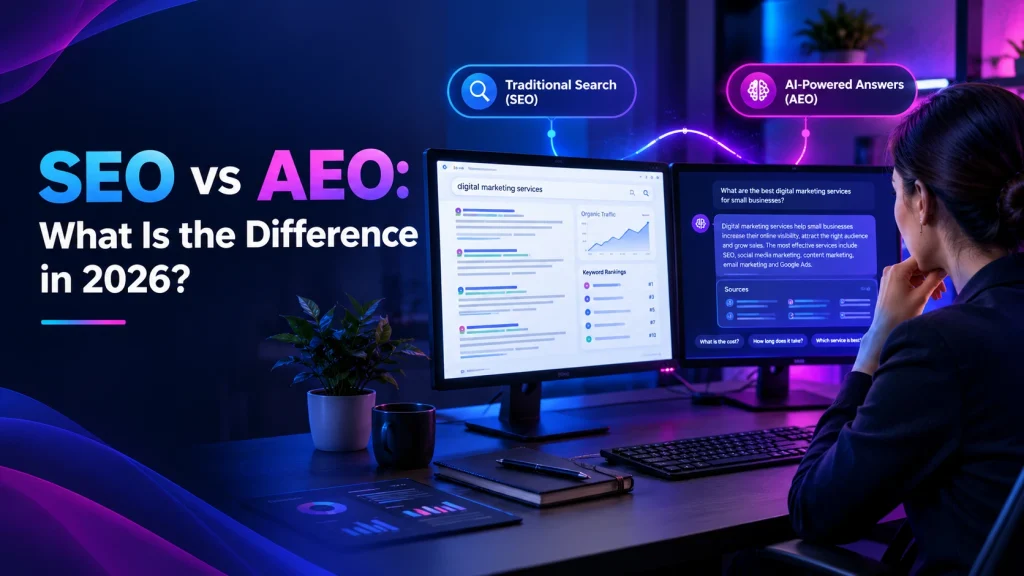
SEO vs AEO: What Is the Difference in 2026? | Marketlift

Introduction The way people look for information on the internet is changing. In times people mostly typed words into search tools and then picked website links. Now they also ask questions using intelligence tools and want fast helpful answers. This change has made two marketing methods more important than ever: Search Engine Optimization (SEO) and Answer Engine Optimization (AEO). What is the difference between SEO and AEO in 2026? Are these methods working against each other. Should companies use both? In this guide we will explain SEO vs AEO look at their differences and give real-life tips to help your company get more visibility on regular search results and on answers, from artificial intelligence tools. What Is SEO (Search Engine Optimization)? Search Engine Optimization or SEO is the process by which a website is improved so that search engines can understand its content and show the pages to people looking for related information. The main goal of SEO is to boost visibility in search results and bring relevant visitors to the site without paying for each click. Key elements of SEO include:- – Keyword research: Knowing what the target audience searches for. – On-page SEO: Improving titles, headings, content and internal links. – SEO: Enhancing crawlability, indexing, mobile usability and website performance. – Content marketing: Publishing useful original and relevant content. – Off-page SEO: Earning trustworthy backlinks and building brand credibility. For example a digital marketing agency that targets businesses might write a blog titled “digital marketing strategies, for small businesses” to draw people who are searching for marketing advice. What Is AEO (Answer Engine Optimization)? Answer Engine Optimization (AEO) is about making your content easy for search engines and AI answer systems to understand, extract and possibly show when users ask questions. The goal of AEO is to give answers to specific questions and share reliable helpful information. Depending on the platform content that is optimized this way might show up in featured snippets voice search results, AI Overviews or other answers generated by AI. Important parts of AEO include: – Answering customer questions directly. – Using clear headings and a logical flow in your content. – Offering short explanations backed by useful details. – Including relevant FAQs to match what people are searching for. – Showing expertise with accurate facts and trusted sources. For example a site could answer “How much does SEO cost, for a business?” by explaining the things that affect pricing. AEO can help that answer be easier to find and understand.. It doesn’t mean an AI system will always pick or show it. SEO vs AEO: What Is the Difference? SEO and AEO share many principles, but their primary objectives differ. Feature SEO AEO Main Goal Improve organic search visibility Make content useful for direct answers Primary focus Pages, topics, and search intent Questions and answer-focused content Content approach Comprehensive, relevant information Clear answers supported by context Visibility opportunities Organic search results Featured answers and AI-powered responses Success measurement Rankings, clicks, traffic, conversions Answer appearances, citations, referral traffic, conversions where measurable Best approach Strong technical SEO and valuable content Strong SEO combined with clear, answer-focused content The important point is that AEO does not replace SEO. Google’s guidance confirms that established SEO practices remain relevant to AI-powered search experiences. Why Are SEO and AEO Important in 2026? Search behavior is becoming more conversational. People ask detailed questions, compare products, and seek recommendations through traditional search engines and AI-powered tools. Businesses need content that helps users at different stages of their decision-making journey. Here is why both strategies matter: 1. Reach customers through search experiences I think SEO helps your pages compete in organic search results while answer‑focused content can improve their suitability for systems that give direct answers. 2. Build trust and credibility I believe accurate information original insights, transparent business details and useful explanations can help show your expertise. 3. Address customer questions I know answering questions, about pricing, services, benefits and processes helps potential customers understand what your business offers. 4. Support the customer journey A person may discover your brand through a search result, learn from a detailed blog, and later contact your business for a service. Neither SEO nor AEO guarantees traffic or leads, but both can support a well-planned digital marketing strategy. 5 Strategies to Improve SEO and AEO Together 1. Understand Search Intent Before writing any content identify what your audience wants to know. Are they looking for facts, comparing services or ready to buy? Use keyword research, customer questions and related search queries to create content that satisfies those needs. 2. Answer Questions Place a clear answer at the start of each section. Then give examples, explanations and extra details. For example define SEO before talking about its benefits. This format helps readers grasp the content quickly without hunting through paragraphs. 3. Create Helpful Original Content Do not just copy articles. Add examples, your own observations, expert tips and details that fit your industry. Google advises focusing on trustworthy, people‑first content instead of making material only to please AI. 4. Strengthen Technical SEO Make sure your key pages can be crawled and indexed. Use page titles, logical headings, useful internal links mobile‑friendly design and fast loading. Structured data can help search features when set up right but special schema is not needed for Google AI features. 5. Measure Performance and Update Content Use Google Search Console to track impressions, clicks and search queries. Use analytics tools to look at engagement and conversions. Where good reports exist, also keep an eye, on AI referrals, citations and brand mentions. Refresh old. Improve pages according to real user needs. SEO vs AEO vs GEO: How Are They Different? Another term worth understanding is Generative Engine Optimization (GEO). SEO :- Focuses on improving visibility in search engines. AEO:- Focuses on making content suitable for answers. GEO:- Focuses on improving the chances of being referenced or cited in AI responses. These terms. Their definitions are not universally standardized. Google considers optimization […]

Short-Form Videos

Why Short-Form Videos Are Essential for Business Growth| Marketlift

Introduction In todays fast‑moving age businesses need effective ways to capture attention connect with customers and promote their products or services. Short‑form videos have become one of the popular content formats because short‑form videos deliver information quickly entertain viewers and share messages in an engaging way. Platforms such as Instagram Reels, YouTube Shorts and TikTok let businesses reach customers through short, engaging videos. From product demonstrations to customer testimonials short‑form videos help brands showcase their value and build relationships with their audiences. Why are short‑form videos essential, for business growth? Short‑form videos can help businesses increase brand awareness improve engagement, demonstrate products generate leads and support sales when combined with a marketing strategy. In this guide Marketlift explains the benefits of short‑form video marketing and how businesses can use short‑form videos to strengthen their presence. What Is Short-Form Video Marketing? Short‑form video marketing means making quick eye‑catching videos to show a business, product, service or brand. These videos are usually a few seconds to about 90 seconds long. Short‑form video marketing length can change depending on the platform the topic and the people watching. Short‑form video marketing is popular on Instagram Reels, YouTube Shorts, TikTok videos and, on quick tutorials, product demos, behind‑the‑scenes clips and customer reviews. The main aim of short‑form video marketing is to share an memorable idea fast. Short‑form video marketing also wants viewers to talk to the brand or do the step. Why Are Short-Form Videos Important for Business Growth? 1. Increase Brand Awareness Short‑form videos help businesses show their brands to people. Engaging pieces can be found through platform suggestions, shares and search tools letting businesses reach folks beyond their fans. Take a clothing shop. It can make styling videos display arrivals and give fashion tips. Those videos can let the shop reach customers who would not have found it otherwise. Consistent branding, visuals and helpful content help people remember the business. 2. Capture Attention Quickly Online users often scroll through a lot of content. Short‑form videos give a way to share a message so viewers do not have to read long explanations. Begin with a question show a common problem or reveal a surprising benefit. Use visuals, captions and a focused message to keep viewers interested. The objective is not just to make videos short. The objective is to make every second to the target audience. 3. Improve Audience Engagement Videos can drive likes, comments, shares, saves and direct messages. These interactions give businesses a chance to learn about their audiences and strengthen customer relationships. For example a digital marketing agency can post SEO tips explain common website mistakes or answer frequently asked marketing questions. I find that asking viewers questions and replying to comments can make Videos more interactive and help pinpoint future content ideas. 4. Build Trust and Credibility Customers often want to understand a business before buying its products or services. Short‑form videos can make a brand feel more open by showing the people, steps and skills behind it. Businesses can share customer testimonials with permission, product demonstrations, team introductions, asked questions and behind‑the‑scenes videos. Authentic content helps potential customers evaluate what a business offers. Make sure that testimonials, product claims and demonstrations are real and accurate. 5. Showcase Products and Services Short‑form videos allow businesses to show how products work and explain the value of their services. An online store might create an unboxing video while a service‑based business could explain its process through an educational clip. Of simply listing features show how your offering answers a real customer need. Clear demonstrations can help potential buyers understand your value proposition and make decisions. 6. Generate Leads and Support Sales Short‑form videos can lead viewers to take useful steps, such as visiting your website looking at a product booking a consultation or reaching out to your team. Add one call, to action like “Visit our website ” “Explore our services ” or “Contact us today.” For instance a digital marketing agency could produce a video that explains three SEO mistakes and then invites viewers to explore its SEO services. Video views do not automatically turn into sales. Results depend on how relevant the audience’s the quality of the content the offer and the customer journey. 7. Support SEO and Content Discovery Short‑form videos can help your search engine optimization strategy by answering questions showing expertise and introducing your brand to people. Use titles, relevant captions, natural keywords and correct descriptions. Post short‑form videos, on platforms and add short‑form videos to useful website pages when they make the visitor experience better. Video content can also show up in search results depending on the platform, query and search engine. Short‑form videos alone do not guarantee website rankings so keep investing in useful website content, technical SEO and relevant internal links. Best Types of Short-Form Videos for Businesses Businesses can try video styles based on the goals they have and the audience they serve. 1. Educational videos: Share tips explain ideas or answer common questions. 2. Product demonstrations: Show how a product works and point out its benefits. 3.Behind-the-scenes videos: Introduce the team, the workspace or the business processes. 4.Customer testimonials: Share real customer experiences, with permission. 5.Trending videos: Use trends that fit your brand while staying true to what you stand for. 6.Problem-and-solution videos: Point out a customer problem. Show a helpful solution. Choose formats that align with your business goals rather than following every trend. How to Create an Effective Short-Form Video Strategy Follow these steps to build a consistent video marketing strategy: 1. Define your goals: Decide whether you want to increase awareness, engagement, website visits or leads. 2. Understand your audience: Research their interests, questions, challenges and preferred platforms. 3. Plan topics: Create a content calendar featuring tutorials, demonstrations, FAQs and relevant industry insights. 4. Create videos: Use clear visuals, readable captions, good lighting and a strong opening. Optimize, for each platform: Adapt the format, captions, titles and content style to the platforms requirements. 5. Include a CTA: Tell […]

Small Business & Digital Marketing

How Small Businesses Can Grow Online With Digital Marketing| Marketlift

Introduction I know that having a product or service is only part of the story. In today’s world people look online before they pick a brand compare prices or buy. Digital marketing becomes essential for businesses that want to reach more people and compete with larger companies. Digital marketing helps small businesses increase visibility attract potential customers build trust and generate sales. With the plan small businesses can grow online without spending a lot of money. In this guide we will explore digital marketing strategies that small businesses can use to strengthen their online presence and achieve sustainable growth. What Is Digital Marketing for Small Businesses? Digital marketing is the process of promoting products or services through online channels such as search engines, websites, social media, email, and online advertisements. For small businesses, it provides an opportunity to connect with their target audience, communicate their value, and measure marketing results. For example, a local bakery can attract nearby customers through Google Business Profile, while an online clothing store can use social media marketing and Google Ads to reach shoppers across India. How to Grow a Small Business Online: 7 Effective Strategies 1. Build a Professional Website A professional website serves as your businesss home. A professional website helps potential customers understand your services explore products and contact you easily. Your website should load quickly run smoothly on devices and give clear information, about your business. Include keywords, helpful content, customer testimonials and visible contact details. A designed website also helps establish credibility and turn website visitors into potential customers. 2. Improve Visibility With Search Engine Optimization (SEO) Search engine optimization makes your website appear in search results on sites such as Google. Search engine optimization can bring people who are already looking for the products or services you offer. Small businesses can boost Search engine optimization by using keywords naturally writing useful blog posts adjusting page titles and descriptions speeding up the website and earning good backlinks. For example a bakery in Prayagraj could create a page aimed at searches such as “best bakery, in Prayagraj.” Search engine optimization takes time. It can bring steady organic traffic without paying for each click. 3. Use Social Media Marketing Social Media Marketing helps businesses talk directly to their audience show their products and create strong relationships. Platforms like Instagram, Facebook, LinkedIn and YouTube give ways to reach new customers. Small businesses can post product demos, customer stories, learning posts, behind-the-scenes videos and special offers. Pick platforms where your audience spends time not all of them. Regular posting, engagement and useful content can build brand awareness and earn customer trust through social media marketing.   4. Invest in Targeted Online Advertising Paid advertising can help small businesses reach customers more quickly. Google Ads can target people searching for products or services while social media ads can reach audiences based on relevant interests and demographics. Start with a budget and a clearly defined campaign goal. Track clicks, enquiries, purchases and conversion costs to understand performance. Avoid spending money without measuring results. Test advertisements and improve campaigns using actual data. 5. Create Helpful Content Content marketing is about making stuff that helps people find answers and fix their problems. Small businesses can share blogs, videos, guides, infographics and FAQ pages to teach their audience. For example a skincare business could share a guide that explains how to choose products, for skin types. Helpful content helps with SEO builds trust and gives people reasons to believe in your business before they buy. 6. Use Email Marketing to Build Relationships Email marketing helps businesses stay connected with existing customers and interested prospects. You can send newsletters product updates, welcome emails, useful tips and personalized offers, to people who have agreed to receive your messages. Segment your email list when appropriate. Make every message valuable. Avoid sending many promotional emails. Email marketing can encourage repeat purchases. It can improve customer relationships. It can support long-term business growth. 7. Optimize Your Local Online Presence Local digital marketing is especially valuable for businesses that serve customers in a city or area. Maintain a Google Business Profile with accurate business details, opening hours, services, photographs and contact information. Encourage customer reviews and respond professionally to feedback. Use local keywords on your website and keep your business information consistent, across online directories. These steps can improve your chances of appearing in local searches and help nearby customers discover your business. How Can Small Businesses Measure Digital Marketing Success? Digital marketing works best when businesses regularly review marketing performance. Track these metrics: Website traffic: Know how many people visit your website. Search rankings: Monitor how visible you are for search terms. Engagement: Measure interactions with your content. Leads and enquiries: Track calls, form submissions and messages. Conversion rate: Measure how many visitors complete a desired action. Return on investment (ROI): Compare marketing returns with the costs involved. Use tools such as Google Analytics and Google Search Console to understand website performance and identify opportunities, for improvement. Common Digital Marketing Mistakes Small Businesses Should Avoid Many businesses struggle online when they expect results or use strategies that lack a clear plan. Avoid these mistakes: – Targeting everyone instead of a specific audience. – Publishing content without understanding customer needs. – Ignoring users and website performance. – Running advertisements, without tracking conversions. – Buying reviews or using misleading marketing claims. – Expecting SEO to deliver results. A strategy consistent effort and regular performance reviews can help businesses make better marketing decisions. Find Out Answers Here 1. How can small businesses grow online with digital marketing? Small businesses can grow online by combining SEO, social media marketing, content creation, email marketing, paid advertising, and local SEO. The best strategy depends on their audience, budget, and business goals. 2. Which digital marketing strategy is best for small businesses? SEO is useful for long-term organic visibility, while social media can build engagement and brand awareness. Paid advertising can generate targeted traffic. Combining suitable strategies usually delivers better […]

Scroll to Top