
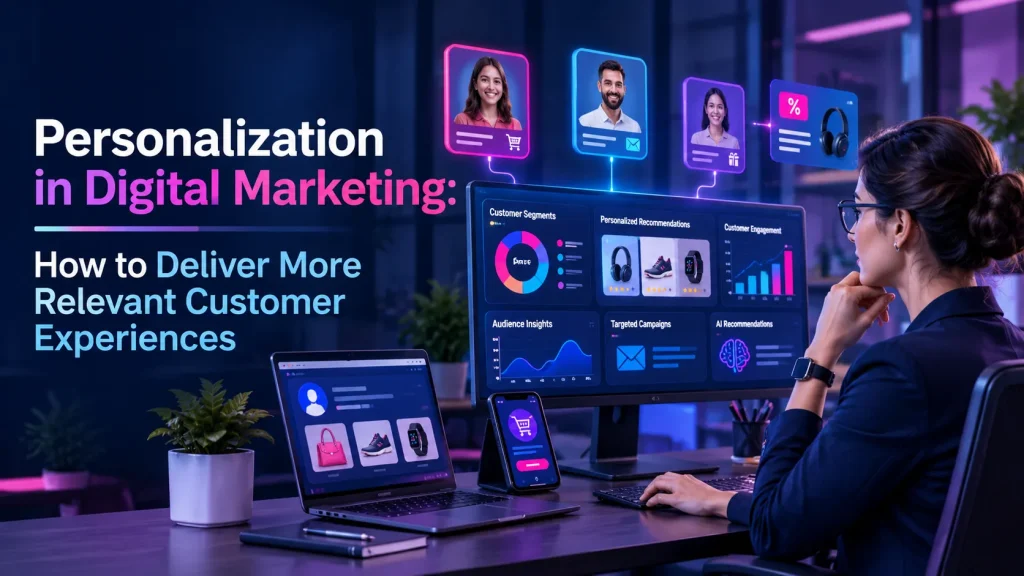
Personalization in Digital Marketing: How to Deliver More Relevant Customer Experiences | Marketlift
Introduction Customers today expect more than advertisements and promotional messages. Today’s audiences want brands to understand their interests, preferences and needs. When businesses deliver content, product recommendations and offers customers are more likely to engage with the brand. This is where personalization in marketing becomes important. It allows businesses to create meaningful customer experiences by using customer information, browsing behaviour, preferences and previous interactions. Whether you run a business startup or established company personalized marketing can help improve engagement build customer trust and increase conversions. In this blog we will explore what digital marketing personalization is, why it matters and how businesses can use it effectively. What Is Personalization in Digital Marketing? Personalization in marketing is the practice of creating customized marketing experiences based on customers interests, preferences, behaviour and interactions, with a brand. Of showing the same message to everyone businesses deliver relevant content, advertisements, emails and product recommendations to different audiences. For example: An online clothing store can recommend products based on a customers purchases or browsing history. Similarly an email campaign can share offers related to products a subscriber has shown interest in. The goal is simple: deliver the message to the right audience at the right time. Why Is Personalization Important in Digital Marketing? Personalization helps businesses connect with customers effectively. It keeps marketing messages relevant of interrupting people with promotions that do not matter to them. Here are some important benefits: 1. Improves Customer Engagement When customers receive content that matches their interests they are more likely to interact with it. Personalized emails, social media posts and product suggestions can encourage customers to explore a brand. 2. Builds Customer Trust Understanding customer needs shows that a business values its audience. Relevant communication builds a relationship and helps customers feel understood. 3. Increases Conversion Rates It offers and recommendations allow customers to find products or services that fit their needs. This can encourage customers to take action, such, as making a purchase or submitting an enquiry. 4. Improves Customer Retention Personalized follow‑ups, loyalty rewards and helpful suggestions help businesses keep existing customers and encourage repeat purchases. 5. Makes Marketing Campaigns More Effective Audience segmentation lets businesses create campaigns instead of spending resources on messages that may not interest everyone. 7 Effective Ways to Use Personalization in Digital Marketing Businesses can introduce personalization across digital marketing channels. Here are seven practical strategies. 1. Use Personalized Email Marketing Email marketing is a way to deliver relevant communication. Businesses can personalize emails using subscriber names, previous purchases, interests and customer preferences. For example an online store can send product recommendations based on a customers shopping activity. Personalized newsletters and exclusive offers can also encourage subscribers to engage with the brand. 2. Create Personalized Website Experiences Your website can display content based on visitors interests and browsing behavior. This may include recommended products, location-specific information recently viewed items or relevant service suggestions. The website experience helps visitors find information more easily and improves their overall browsing experience. 3. Use Customer Data for Audience Segmentation Audience segmentation means dividing customers into groups based on shared characteristics, interests, behaviour or purchasing patterns. For example a fitness business might create audience groups for beginners experienced members and people interested in personal training. This approach allows businesses to deliver relevant messages to each group. 4. Personalize Social Media Marketing Social media platforms provide opportunities to understand audience interests and engagement patterns. Businesses can use these insights to create posts, videos, advertisements and promotional campaigns. For instance a beauty brand can share skincare tips, product recommendations and educational videos based on the interests of its target audience. 5. Deliver Relevant Product Recommendations Product recommendations help customers discover items that match their preferences. E-commerce businesses can suggest products, complementary items or popular choices based on previous interactions. These recommendations can make shopping easier while creating opportunities for sales. 6. Use AI and Marketing Automation Artificial intelligence and marketing automation help businesses analyze customer behaviour and deliver communication at scale. Businesses can use these technologies, for automated email sequences, customer segmentation, personalized recommendations and chatbot interactions. However automated messages should remain useful, accurate and relevant than feeling repetitive or intrusive. 7. Personalize Customer Communication Personalization should continue beyond advertisements and promotional campaigns. Businesses can customize customer support messages follow-up emails, appointment reminders and service recommendations. For example a digital marketing agency can send clients performance updates based on their selected services and campaign goals. How to Use Customer Data for Better Personalization Effective personalization begins by understanding your audience. Businesses can. Use relevant information in responsible ways. Important customer data sources include:- Website Analytics:- Know what visitors like, which pages they hit most and how they browse. Customer Feedback:- Learn about customer expectations, preferences and challenges. Purchase History:- Identify purchases and related interests. Email Engagement:- Understand which messages and offers attract attention. CRM Systems:- Organize customer interactions, enquiries and preferences. Always put transparency first get consent and obey all data protection and privacy rules. Gather the data that is necessary to make customer experiences better. Common Personalization Mistakes Businesses Should Avoid Although personalization offers benefits businesses should avoid these common mistakes:- Using Incorrect Customer Data:- Outdated information can lead to recommendations. Over personalizing Messages:- Excessive personal references can make customers uncomfortable. Ignoring Customer Privacy:- Collecting or using information without permission can damage trust. Sending Repetitive Content:- Repeated recommendations and promotional messages can reduce engagement. Ignoring Campaign Performance:- Businesses should regularly review results. Improve their personalization strategies. Successful personalization should make customer experiences helpful not more complicated. How to Measure the Success of Personalized Marketing To see if personalization works businesses should watch performance metrics. Click-Through Rate (CTR):- How many people click on a marketing link or advertisement. Conversion Rate:- Shows how many visitors complete a desired action. Email Engagement:- Tracks email opens, clicks and other meaningful interactions. Customer Retention Rate:- Measures how effectively a business maintains customer relationships. Customer Lifetime Value (CLV):- Estimates the value a customer brings throughout their relationship, with a business. Compare campaign […]